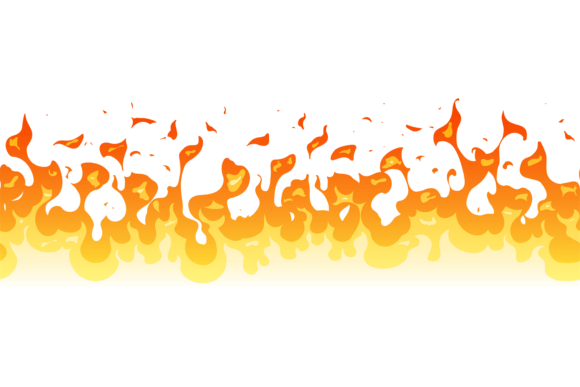
Fire Seamless Pattern Decorative Banner: Design Applications and Format Considerations
The integration of dynamic visual elements into digital and print media often requires resources that are both aesthetically striking and technically versatile. A fire seamless pattern decorative banner serves as a specialized graphic asset designed to meet these dual needs. This resource typically features a continuous, repeating motif of flames, embers, or heat-induced distortions, arranged within a border or header format. The primary utility of such an asset lies in its ability to convey intensity, energy, urgency, or warmth without overwhelming the central content of a design project. Understanding the technical specifications, including availability in EPS, JPG, SVG, and transparent PNG formats, is crucial for designers and content creators who aim to implement these elements effectively across various mediums.
Understanding the Asset and Its Core Utility
A fire seamless pattern is distinct from a static image of fire because it is engineered to tile infinitely without visible seams or breaks. When applied to a decorative banner, this pattern creates a consistent visual frame that can adapt to different dimensions. The "decorative banner" aspect implies that the graphic is structured to highlight text, frame images, or separate sections of a layout. Isolated on a white background or provided with transparency, these assets offer flexibility in composition. The inclusion of multiple file formats ensures that the user can select the appropriate version for their specific workflow, whether that involves vector-based editing in professional software or rapid deployment in web design tools.
Individuals researching this type of graphic asset are often looking for solutions that balance visual impact with ease of use. The appeal of a fire-themed design extends beyond literal representations of combustion. It is frequently associated with concepts such as passion, danger, transformation, summer heat, or culinary excellence. Consequently, the decision to utilize a fire seamless pattern decorative banner is rarely purely aesthetic; it is also semantic, intended to reinforce the message or theme of the underlying content.
Evaluating File Formats: EPS, SVG, JPG, and PNG
One of the most critical considerations when selecting a decorative banner template is the file format. Each format offered—EPS, JPG, SVG, and transparent PNG—serves a distinct purpose in the design ecosystem. Understanding these differences helps prevent technical issues during implementation.
- EPS (Encapsulated PostScript): This vector format is ideal for professional print applications. Because it is resolution-independent, the fire pattern can be scaled to any size without losing quality. Designers using Adobe Illustrator or similar vector-based programs will find EPS files essential for maintaining crisp edges and clean lines, particularly when the banner is part of a larger printed material such as a poster or brochure.
- SVG (Scalable Vector Graphics): Similar to EPS, SVG is a vector format, but it is optimized for web use. It allows for small file sizes and perfect scalability on responsive websites. For developers and web designers, an SVG fire banner ensures that the graphic remains sharp on high-resolution displays and retina screens, while also allowing for potential CSS styling or animation interactions.
- JPG (Joint Photographic Experts Group): This raster format is suitable for quick previews or situations where transparency is not required. Since JPGs do not support transparent backgrounds, the "isolated on white background" variant is typically provided in this format. It is widely compatible but lacks the scalability of vector formats, making it less suitable for large-format printing or responsive web design where resizing is frequent.
- Transparent PNG (Portable Network Graphics): This format is crucial for digital compositions where the banner must overlay other images or colored backgrounds. The transparency allows the fire pattern to blend seamlessly with the underlying design elements. However, like JPG, it is a raster format, meaning it has a fixed resolution. Users must ensure the provided PNG dimensions are sufficient for their intended use to avoid pixelation.
Strategic Applications and Design Contexts
Determining whether a fire seamless pattern decorative banner aligns with your project goals requires an assessment of the intended audience and context. These assets are particularly effective in industries and scenarios where high energy or strong emotional responses are desired.
In the culinary sector, for example, a fire banner can evoke the sensation of grilling, spiciness, or wood-fired cooking. Restaurants and food bloggers may use these borders to highlight menu items such as steaks, barbecued dishes, or spicy sauces. The visual cue of fire immediately communicates flavor profiles and cooking methods, enhancing the viewer's anticipation.
Sports and fitness brands also benefit from this imagery. Fire is synonymous with intensity, competition, and burning calories. A decorative banner featuring a flame pattern can frame promotional content for gyms, martial arts studios, or extreme sports events. In these contexts, the graphic reinforces the brand's message of power and determination.
Additionally, seasonal campaigns, particularly those related to summer festivals, bonfires, or Halloween, often utilize fire motifs. The seamless nature of the pattern allows for flexible layout adjustments, making it easier to adapt banners for social media posts, email headers, or website hero sections without extensive redesign work.
Tradeoffs and Limitations to Consider
While visually compelling, fire-themed graphics come with specific tradeoffs that designers must evaluate. The primary concern is readability. Fire patterns are inherently busy and high-contrast. If the decorative banner is placed too close to text or if the flames are too intricate, it can create visual noise that distracts from the main message. To mitigate this, it is often necessary to use solid color overlays, adjust opacity, or ensure sufficient padding between the pattern and any textual content.
Another consideration is thematic appropriateness. Fire carries connotations of danger and destruction. In contexts requiring calmness, trust, or corporate professionalism, such as healthcare, finance, or legal services, a fire banner may send the wrong signal. It is essential to align the visual metaphor with the brand voice. Using a fire pattern in a serious financial report, for instance, could be perceived as alarming or unprofessional.
Technical limitations also arise with raster formats. If a user selects a JPG or PNG file that is too small for their needs, upscaling will result in blurriness or pixelation. This is a common pitfall for those unfamiliar with the differences between vector and raster graphics. For projects requiring multiple sizes or large-format prints, relying solely on raster files can lead to additional costs and time spent sourcing higher-resolution alternatives.
Decision-Making Insights for Selectors
When evaluating a fire seamless pattern decorative banner, consider the following practical steps to ensure the asset meets your requirements:
- Define the End Use: Determine if the final output is digital or print. For print, prioritize EPS files. For web, prioritize SVG or optimized PNGs.
- Check Scalability Needs: If the banner needs to resize dynamically across devices, vector formats (SVG/EPS) are non-negotiable. Fixed-size social media graphics may tolerate high-resolution PNGs.
- Assess Background Compatibility: If your design has a complex background, ensure you have access to the transparent PNG version. If the background is solid white, the JPG version may suffice and load faster.
- Evaluate Visual Hierarchy: Preview the banner with your actual content. Ensure the fire pattern does not compete with key information. Adjust contrast or spacing as needed to maintain clarity.
Ultimately, a fire seamless pattern decorative banner is a powerful tool when used with intention. It offers a ready-made solution for adding thematic depth and visual interest to designs. By carefully selecting the appropriate file format and considering the contextual implications of fire imagery, creators can leverage these assets to enhance communication rather than distract from it. Whether for a culinary promotion, a sports campaign, or a seasonal event, the right implementation of this graphic element can significantly elevate the overall impact of the design.